
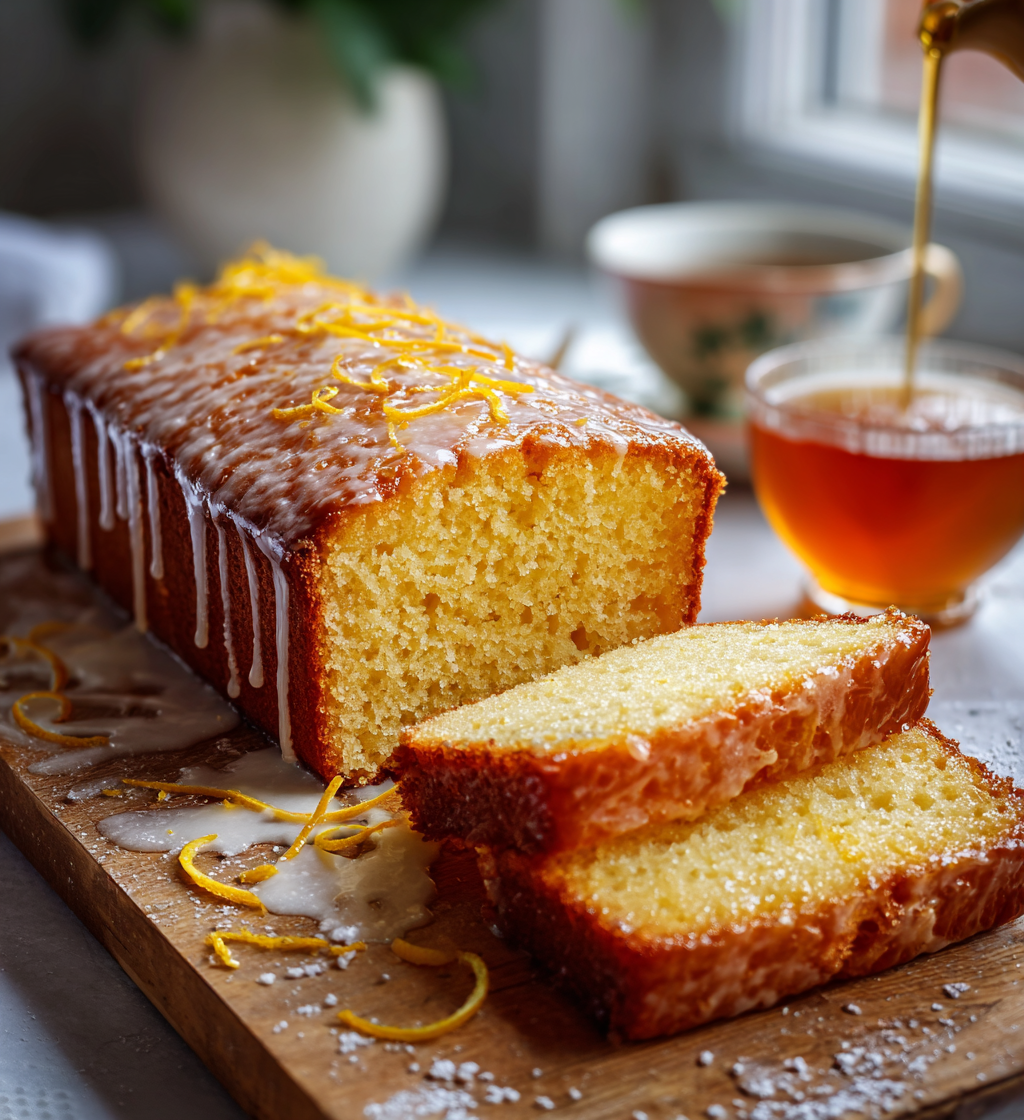
There are very few bakes as universally beloved in Britain as a proper Lemon Drizzle Cake. It has been voted England’s favourite cake flavour more than once, and for very good reason. Light, buttery sponge packed with fresh lemon zest, baked until beautifully golden, then pierced all over and soaked in a sharp, sweet lemon syrup that sinks into every crumb and transforms the cake into something genuinely extraordinary. It is one of those recipes that looks deceptively simple and delivers results that are anything but.
This is the recipe you will come back to again and again — for afternoon tea, for birthdays, for bake sales, for a rainy Tuesday that simply demands something bright and delicious. It is made in a single loaf tin with everyday ingredients, comes together in well under an hour, and produces a cake that is perfectly moist, properly zingy, and beautifully golden every single time. Once you bake it, you will completely understand why lemon drizzle has been a cornerstone of British baking for generations.
Why You Will Love This Recipe
- A true British classic — voted England’s favourite cake flavour time and again
- Made in one bowl and one loaf tin — minimal washing up, maximum reward
- Wonderfully moist and tender thanks to the warm lemon syrup drizzle soaked in straight from the oven
- Bright, properly zingy lemon flavour from fresh lemon zest and juice throughout
- Simple enough for beginner bakers yet impressive enough to serve at any occasion
- Keeps beautifully in an airtight tin for up to 5 days and freezes well too
The Two Golden Rules of Lemon Drizzle Cake
For a truly perfect lemon drizzle cake, there are two rules that must never be broken. The first is using both the zest and juice of unwaxed lemons in the sponge batter — the zest carries the fragrant, aromatic lemon oils that give the cake its beautiful flavour, while the juice adds sharpness and brightness. If you can only find waxed lemons in your supermarket, soak them in hot water for five minutes and scrub the skins thoroughly before zesting.
The second rule — and this is the one that separates a good lemon drizzle from a truly great one — is pouring the drizzle over the cake while it is still warm and still in the tin. A warm cake is porous. It will absorb every drop of that tangy, sweet lemon syrup deep into its crumb, creating that signature moist, sticky, almost juicy texture that makes lemon drizzle completely irresistible. A cold cake will let the drizzle sit on top and crystallise into a crunchy crust — which is also delicious, but an entirely different result. Both methods work; just be deliberate about which you want.
How to Make Classic British Lemon Drizzle Cake
Step 1 — Prepare Your Tin and Oven
Preheat your oven to 180°C / 160°C fan / Gas Mark 4. Grease a standard 900g (2lb) loaf tin generously with softened butter, then line with a strip of baking parchment that overhangs both ends — this makes it much easier to lift the finished cake out of the tin cleanly. Set aside.
Step 2 — Cream the Butter and Sugar
In a large mixing bowl, beat the softened unsalted butter and caster sugar together using an electric hand mixer on medium speed for 4–5 minutes until the mixture is very pale, noticeably lighter in volume, and genuinely fluffy. This step is the foundation of the cake’s light texture and should not be rushed. Scrape down the sides of the bowl once or twice during beating to ensure everything is incorporated evenly. Stir in the finely grated lemon zest at this stage — mixing it directly into the butter and sugar helps to release the fragrant lemon oils from the zest.
Step 3 — Add the Eggs
Add the eggs one at a time, beating well after each addition. If the mixture begins to look curdled or separated, add a tablespoon of the measured self-raising flour and beat briefly — this will bring the batter back together immediately. A well-emulsified batter at this stage is important for a light, even crumb in the finished cake.
Step 4 — Fold in the Flour and Lemon Juice
Sift the self-raising flour and a pinch of fine salt directly over the batter. Using a large spatula or a metal spoon, fold the flour in gently using a figure-of-eight motion until the batter is almost combined — a few streaks of flour remaining is fine at this point. Add the fresh lemon juice and the milk, and fold until the batter is smooth, thick, and drops reluctantly from the spoon. Do not overmix — gentle folding keeps the air in the batter and gives the lightest possible sponge.
Step 5 — Bake
Spoon the batter into the prepared loaf tin and smooth the top gently with the back of the spoon. Bake on the middle shelf of the preheated oven for 45–55 minutes until the cake is well risen, deeply golden on top, and a skewer inserted into the centre comes out completely clean. The top may crack along the middle as it bakes — this is entirely normal and is the characteristic look of a properly made British lemon drizzle loaf. Do not open the oven door before 40 minutes — opening too early can cause the cake to sink in the centre.
Step 6 — Make the Lemon Drizzle
While the cake is baking, prepare the drizzle. In a small bowl, stir together the sifted icing sugar and freshly squeezed lemon juice until you have a smooth, runny, slightly translucent syrup. The consistency should be loose enough to pour but not as thin as water — add the lemon juice gradually, as lemon sizes vary and you may not need all of it. Taste and make sure it is both sweet and properly sharp — this drizzle should have a real lemon kick.
Step 7 — Drizzle and Cool
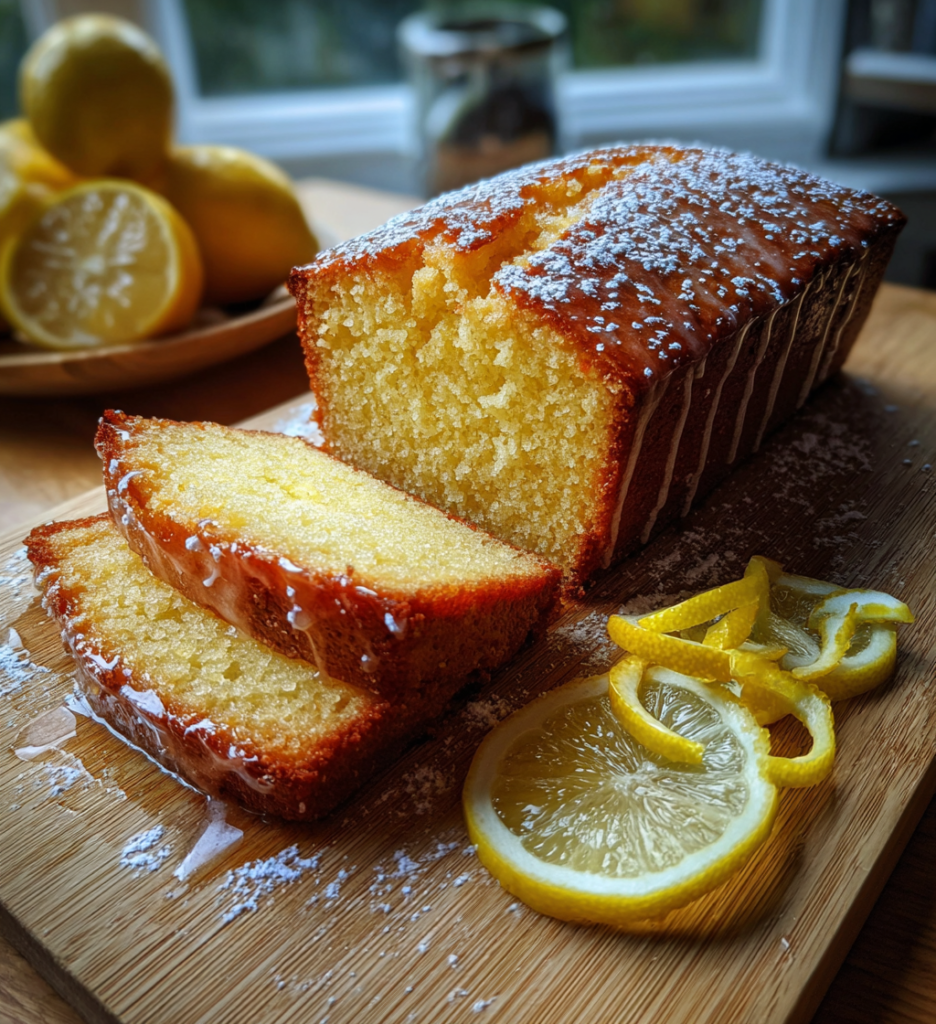
Remove the cake from the oven and leave it in the tin. While it is still warm, use a skewer or a thin sharp knife to poke holes all over the surface of the cake, going about two-thirds of the way down — these channels allow the drizzle to soak deeply into the crumb rather than simply sitting on top. Pour the lemon drizzle slowly and evenly over the surface of the warm cake, making sure it covers every part of the top. Some will run down the sides and pool around the edges — this is perfect. Leave the cake to cool completely in the tin before lifting out. As it cools, the drizzle will soak in and the sugar will begin to form the characteristic slightly sticky, lightly crystallised surface that defines a great lemon drizzle.
Step 8 — Serve
Once completely cool, lift the cake out of the tin using the parchment overhang. Place on a board or serving plate and slice into generous portions. Serve as it is alongside a proper cup of British tea, or with a small spoonful of clotted cream or crème fraîche on the side for something a little more indulgent.
Tips for the Perfect Lemon Drizzle Cake
- Use unwaxed lemons wherever possible — the zest is cleaner in flavour and free from the bitter, waxy coating found on treated lemons
- Do not skip the thorough creaming of butter and sugar — this is what creates the light, airy texture of the finished sponge
- Fold the flour in gently — overworking the batter develops the gluten in the flour and results in a tougher, denser cake
- Never open the oven door before 40 minutes — this is the most common cause of a sunken centre
- Poke the holes deeply and generously — the more holes, the more drizzle soaks in, and the more moist and flavourful every slice will be
- Pour the drizzle while the cake is warm and still in the tin — this is the key to that irresistibly moist, sticky crumb
Serving Suggestions
Lemon drizzle cake is perfect served at room temperature in thick, generous slices alongside a pot of freshly brewed tea. For a more substantial afternoon tea serving, accompany with a bowl of clotted cream or a spoonful of lemon curd. A dusting of icing sugar over the top just before serving adds a beautiful finishing touch. At a celebration, decorate with thin slices of candied lemon, edible flowers, or a simple white glaze icing for a more dressed-up presentation.
Variations to Try
- Lemon and poppy seed — Fold two tablespoons of poppy seeds into the batter for a classic combination that adds subtle crunch and a beautiful speckled appearance
- Lemon and elderflower — Add two tablespoons of elderflower cordial to the drizzle in place of some of the lemon juice for a delicate, floral British twist
- Lemon and blueberry — Fold 150g of fresh or frozen blueberries into the batter before baking for bursts of juicy fruit throughout the sponge
- Lime drizzle — Replace the lemon with the zest and juice of four limes for a sharper, more tropical variation that is equally wonderful
- Round cake version — The batter works beautifully in a greased and lined 20cm round cake tin. Bake at 180°C / 160°C fan for 35–40 minutes until golden and a skewer comes out clean
How to Store Lemon Drizzle Cake
Store the cooled cake in an airtight tin or container at room temperature — do not refrigerate, as the cold will make the sponge firm and dry. It keeps beautifully for up to 5 days, and many bakers find it actually improves on day two as the drizzle continues to work its way through the crumb. To freeze, wrap the completely cooled, unglazed or glazed cake tightly in two layers of clingfilm and place in a freezer bag. Freeze for up to 3 months and defrost at room temperature before serving.
Print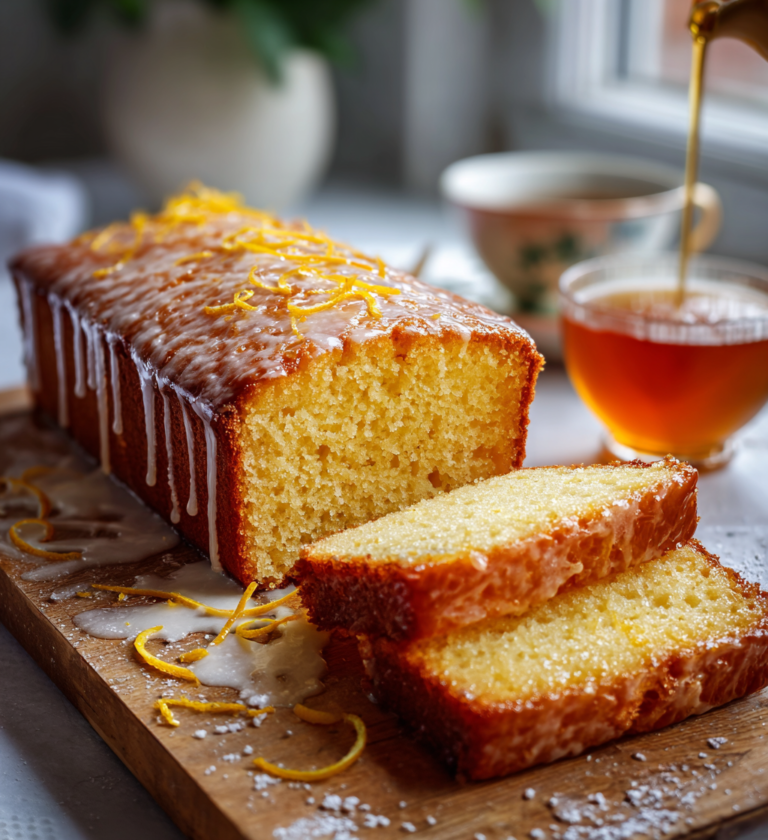
Classic British Lemon Drizzle Cake (Zingy, Moist & Perfectly Golden)
A Classic British Lemon Drizzle Cake — a light, buttery loaf sponge packed with fresh lemon zest and juice, baked until deeply golden, then pierced and soaked in a sharp, sweet lemon syrup drizzle while still warm. Wonderfully moist, properly zingy, and beautifully simple. England’s favourite cake and a timeless British bake perfect for afternoon tea and every occasion in between.
- Total Time: 1 hour 5 minutes
- Yield: 10 slices 1x
Ingredients
- 225g unsalted butter, softened
- 225g caster sugar
- Finely grated zest of 2 unwaxed lemons
- Juice of 1 lemon (for the sponge)
- 4 large eggs, at room temperature
- 225g self-raising flour, sifted
- Pinch of fine salt
- 2 tbsp full-fat milk
- For the drizzle: 150g icing sugar, sifted + juice of 1½ lemons
Instructions
- Preheat the oven to 180°C / 160°C fan / Gas Mark 4. Grease and line a 900g (2lb) loaf tin with baking parchment, leaving an overhang on each side.
- Beat the softened butter and caster sugar together for 4–5 minutes until very pale and fluffy. Stir in the finely grated lemon zest.
- Add the eggs one at a time, beating well after each addition. Add a tablespoon of flour if the mixture starts to curdle.
- Sift over the self-raising flour and a pinch of salt. Fold in gently with a spatula. Add the lemon juice and milk and fold until smooth. Do not overmix.
- Spoon into the prepared tin, smooth the top, and bake for 45–55 minutes until deeply golden, well risen, and a skewer inserted into the centre comes out clean. Do not open the oven before 40 minutes.
- While the cake bakes, stir together the sifted icing sugar and lemon juice until a smooth, runny drizzle forms.
- Remove the cake from the oven. While still warm and in the tin, poke holes all over the surface with a skewer. Pour the lemon drizzle slowly and evenly over the top. Leave to cool completely in the tin before lifting out and slicing.
Notes
- Use unwaxed lemons for the best flavour and zest.
- Always zest lemons before juicing — it is much easier.
- Pour the drizzle while the cake is still warm and in the tin for maximum moisture absorption.
- Do not open the oven door before 40 minutes to prevent the cake from sinking.
- Store in an airtight tin at room temperature for up to 5 days — do not refrigerate.
- Freeze for up to 3 months, tightly wrapped in clingfilm.
- For lemon and poppy seed, fold 2 tbsp poppy seeds into the batter before baking.
- Prep Time: 15 minutes
- Cook Time: 50 minutes
- Category: Cakes
- Method: Baking
- Cuisine: British
- Diet: Vegetarian
Nutrition
- Serving Size: 1 slice
- Calories: 355
- Sugar: 32 g
- Sodium: 85 mg
- Fat: 18 g
- Saturated Fat: 11 g
- Unsaturated Fat: 6 g
- Trans Fat: 0.3 g
- Carbohydrates: 44 g
- Fiber: 1 g
- Protein: 5 g
- Cholesterol: 105 mg
Keywords: classic British lemon drizzle cake, lemon drizzle cake UK, easy lemon drizzle loaf, moist lemon drizzle cake, traditional British lemon cake, lemon drizzle recipe UK, afternoon tea cake UK, best lemon drizzle cake
Frequently Asked Questions
Can I use plain flour instead of self-raising?
Yes. If you only have plain flour, substitute the self-raising flour with the same quantity of plain flour and add two teaspoons of baking powder. Sift them together well before adding to the batter to ensure the baking powder is evenly distributed.
Why did my lemon drizzle sink in the middle?
The most common cause is opening the oven door before the cake has had time to set — usually before the 40-minute mark. The sudden drop in temperature causes the partially set sponge to collapse. Other causes include under-baking, too much liquid in the batter, or an oven that is not hot enough. Always check with a skewer before removing from the oven.
Can I make this cake dairy-free?
Yes. Replace the unsalted butter with a good quality vegan block butter at around 80% fat content, and use a plant-based milk such as oat or almond milk in place of the dairy milk. The result is very similar to the original.
How many lemons do I need?
For this recipe, two large unwaxed lemons will give you enough zest and juice for both the sponge and the drizzle. If your lemons are small, use three. Always zest the lemons before juicing — it is much easier to zest a whole lemon than one that has already been squeezed.
Closing
A Classic British Lemon Drizzle Cake is one of those recipes that every home baker should have in their repertoire — and once you have made it, you will wonder how you ever managed without it. Simple to make, beautiful to look at, and absolutely delicious in every bite, it is the kind of bake that brings genuine joy to everyone who tries it. Whether it is your first time or your fiftieth, this cake never disappoints.