
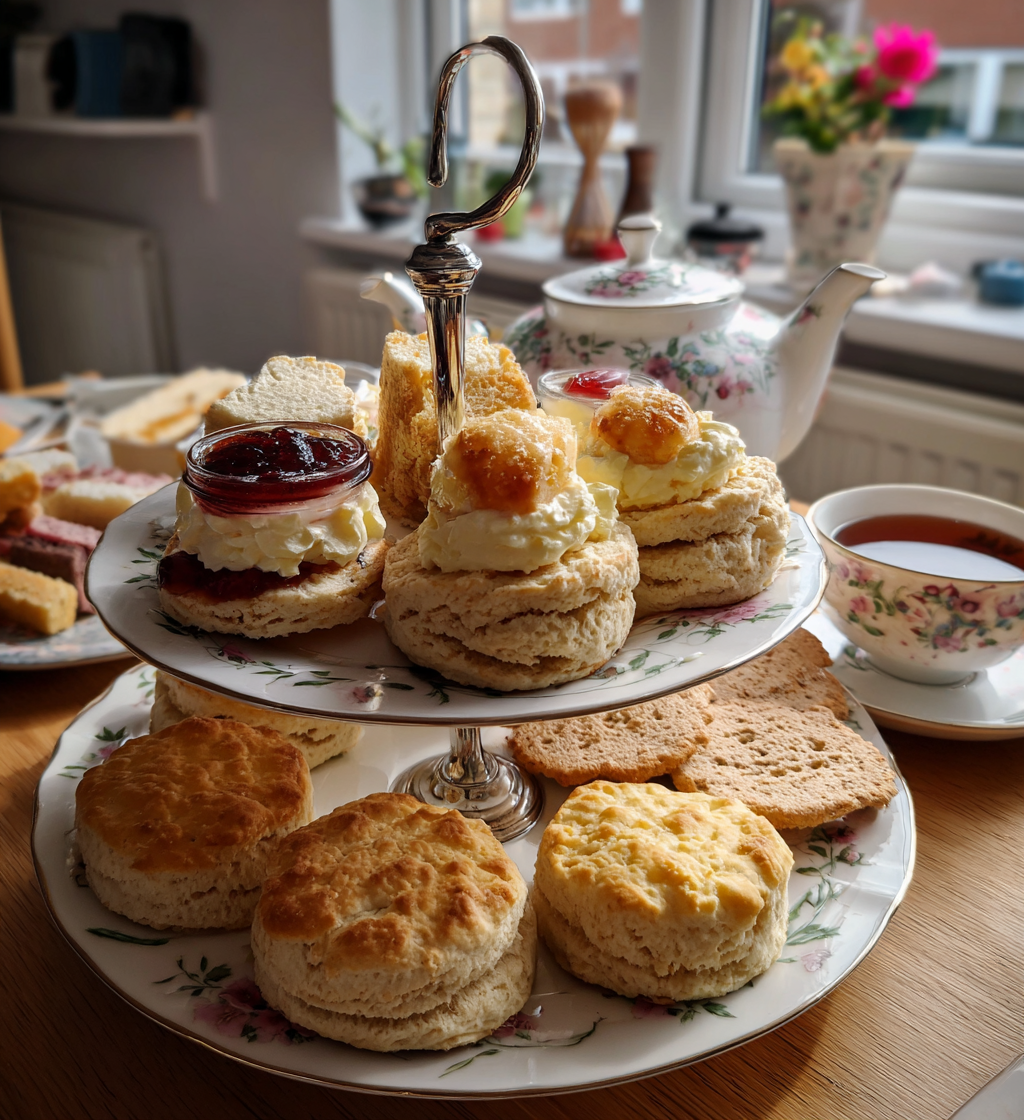
A traditional British high tea is one of the most charming and elegant dining experiences in British culture. Whether you are hosting a special celebration, entertaining guests, or simply enjoying a relaxing afternoon at home, a well-prepared high tea spread brings warmth, comfort, and a true sense of occasion. With the right combination of savoury bites, freshly baked scones, and sweet treats, your high tea table will feel both impressive and wonderfully inviting.
The beauty of a classic British high tea lies in its balance. A thoughtfully prepared spread combines delicate finger sandwiches, warm scones with clotted cream and jam, and an irresistible selection of cakes and sweet bites — all served alongside freshly brewed tea. Once you understand the traditional structure, creating your own high tea menu becomes a genuinely enjoyable experience.
What Is a Traditional British High Tea?
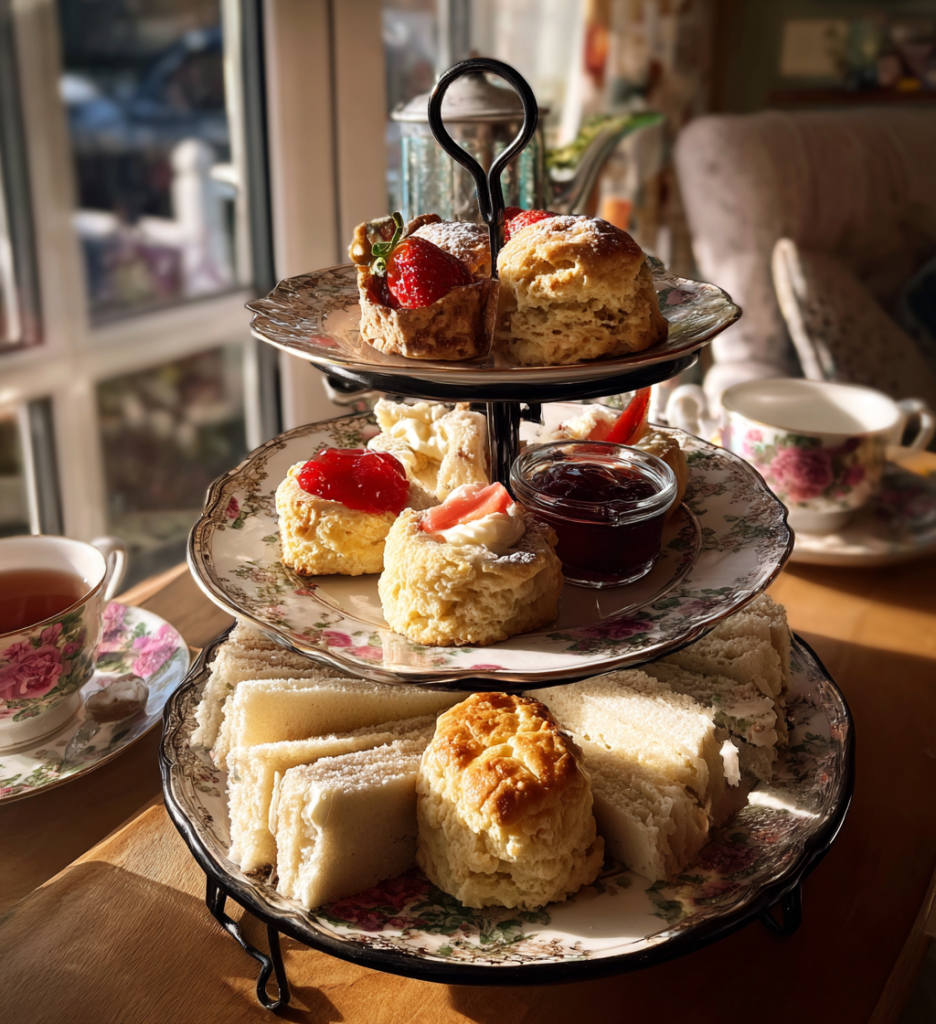
A traditional British high tea is a light meal built around tea, typically served in the late afternoon. It features three tiers of food: a savoury tier of finger sandwiches, a middle tier of scones with jam and clotted cream, and a sweet tier of cakes, pastries, and biscuits. The entire spread is served alongside a pot of freshly brewed tea — traditionally English Breakfast or Earl Grey.
Despite common confusion, high tea and afternoon tea are slightly different traditions. Afternoon tea is the lighter, more refined version typically associated with elegant tea rooms and celebrations. High tea historically referred to a heartier early evening meal enjoyed by working families. Today, the two terms are widely used interchangeably, and both centre on the same beloved combination of tea, sandwiches, scones, and sweets.
The Classic High Tea Menu Structure
A traditional British high tea menu follows a clear and well-loved structure. Each tier serves a different purpose and creates the perfect balance of flavours and textures throughout the meal.
Tier One — Savoury Finger Sandwiches
Finger sandwiches form the foundation of any proper British high tea. Made with soft, fresh bread and light fillings, they are cut into neat fingers or triangles and served without crusts for a refined presentation. Classic fillings include:
- Cucumber and cream cheese
- Smoked salmon with cream cheese
- Egg mayonnaise with cress
- Coronation chicken
- Mature cheddar and chutney
The key is to keep the fillings light and flavourful without overpowering the bread. Use good quality fresh bread — white, brown, or granary — and butter each slice lightly before adding the filling.
Tier Two — Freshly Baked Scones
Scones are the heart of any British high tea. Served warm with clotted cream and strawberry jam, they are the most iconic part of the entire spread. Traditional plain scones are the most popular choice, though fruit scones with sultanas are equally beloved.
For the best results, serve scones warm and freshly baked. When it comes to the great British debate — cream first or jam first — Devon tradition places cream first, while Cornwall insists on jam first. Either way, the combination is truly irresistible.
Tier Three — Cakes, Pastries & Sweet Treats
The sweet tier is where you can showcase the best of British baking. A well-chosen selection of cakes and sweet bites rounds off the high tea experience beautifully. Classic options include:
- Victoria sponge cake sliced into small portions
- Lemon drizzle cake
- Battenberg cake
- Millionaire’s shortbread squares
- Chocolate tiffin
- Shortbread biscuits
- Miniature eclairs or cream puffs
- Eton Mess served in individual glasses
The Tea — Choosing the Right Brew
No British high tea is complete without a proper pot of tea. The most traditional choices are English Breakfast tea, Earl Grey, and Darjeeling. Serve with a separate jug of milk, a bowl of sugar, and lemon slices for those who prefer their tea black.
For guests who prefer alternatives, a pot of camomile or peppermint tea makes a thoughtful addition. Always brew tea in a warmed teapot and serve in proper teacups for the full traditional experience.
How to Present Your High Tea Table
Presentation is just as important as the food itself when it comes to British high tea. A tiered cake stand is the traditional way to display your food — finger sandwiches on the bottom tier, scones in the middle, and cakes and sweets on top. If you do not have a tiered stand, elegant serving platters and cake plates arranged across the table work beautifully.
- Use matching crockery for a cohesive, elegant look
- Add fresh flowers or a simple table cloth for atmosphere
- Provide small plates, cake forks, and napkins for each guest
- Keep portions small and refined — high tea is about variety, not quantity
- Arrange food neatly and symmetrically for the best visual impact
Tips for the Perfect British High Tea at Home
- Prepare your finger sandwiches no more than one hour before serving to keep them fresh
- Bake scones on the day — freshly baked scones are always best
- Cakes and sweet treats can be prepared the day before to save time
- Always warm the teapot before brewing — add hot water, swirl, then discard before adding your tea
- Offer a variety of fillings and flavours to suit different tastes
- Keep a spare pot of tea ready — guests will always want a refill
Classic British High Tea Menu Ideas (Elegant & Traditional Inspiration)
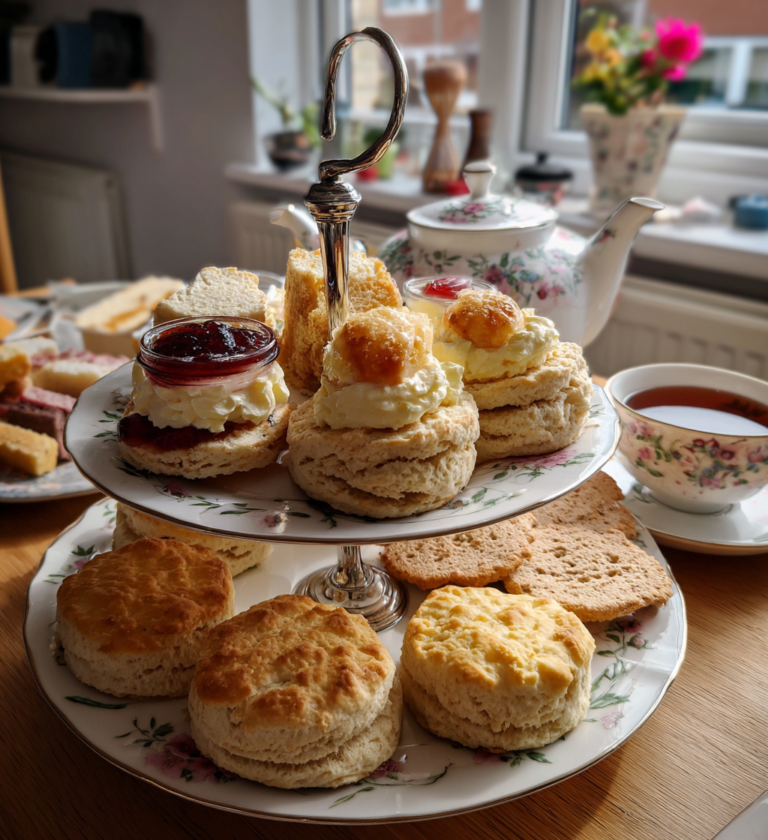
Classic British high tea menu ideas featuring finger sandwiches, freshly baked scones with clotted cream and jam, cakes, pastries, and sweet treats. A timeless and elegant spread perfect for celebrations, gatherings, or a relaxing afternoon at home.
- Total Time: 1 hour 5 minutes
- Yield: 6 servings 1x
Ingredients
- 8 slices soft white or brown bread (for finger sandwiches)
- Butter, softened
- 1 cucumber, thinly sliced
- 100g smoked salmon
- 2 boiled eggs, mashed with 2 tbsp mayonnaise
- 8 freshly baked scones
- 150g clotted cream
- 150g strawberry jam
- 1 Victoria sponge cake, sliced
- 12 shortbread biscuits
- 12 squares millionaire’s shortbread
- Selection of teas (English Breakfast, Earl Grey, Darjeeling)
- Fresh milk and sugar for serving
Instructions
- Prepare finger sandwiches by removing crusts, buttering bread, and adding fillings of cucumber, smoked salmon, and egg mayonnaise. Cut into neat fingers or triangles.
- Arrange finger sandwiches on the bottom tier of a cake stand or serving platter.
- Place freshly baked scones on the middle tier with small bowls of clotted cream and strawberry jam alongside.
- Arrange sliced Victoria sponge, shortbread biscuits, and millionaire’s shortbread squares on the top tier.
- Brew a warmed pot of English Breakfast or Earl Grey tea and serve with milk, sugar, and lemon slices.
- Present everything together on the table and serve immediately.
Notes
- Prepare finger sandwiches no more than one hour before serving.
- Bake scones fresh on the day for best results.
- Cakes and sweet treats can be prepared the day before.
- Always warm the teapot before brewing.
- Keep portions small — high tea is about variety, not quantity.
- Use a tiered cake stand for a traditional presentation.
- Prep Time: 45 minutes
- Cook Time: 20 minutes
- Category: Tea Time
- Method: Mixed
- Cuisine: British
- Diet: Vegetarian
Nutrition
- Serving Size: 1 full tea set portion
- Calories: 480
- Sugar: 22 g
- Sodium: 430 mg
- Fat: 20 g
- Saturated Fat: 10 g
- Unsaturated Fat: 8 g
- Trans Fat: 0 g
- Carbohydrates: 62 g
- Fiber: 3 g
- Protein: 12 g
- Cholesterol: 55 mg
Keywords: British high tea, afternoon tea menu, high tea ideas UK, finger sandwiches, British scones, tea party food, classic British tea time, elegant tea recipes
Frequently Asked Questions
What is the difference between high tea and afternoon tea?
Afternoon tea is a lighter, more refined meal typically served between 3pm and 5pm, centred on finger sandwiches, scones, and cakes. Traditional high tea was historically a more substantial early evening meal that included heartier savoury dishes. Today, both terms are widely used to describe the classic British tea-time spread of sandwiches, scones, and sweet treats.
What tea is traditionally served at British high tea?
The most traditional choices are English Breakfast tea and Earl Grey. Darjeeling is also a popular option. Tea is always served in a warmed teapot alongside milk, sugar, and lemon.
How many people does a high tea serve?
A typical high tea spread serves between four and six guests comfortably. Finger sandwiches are usually made in batches of 16 to 20 pieces, scones in batches of 8 to 12, and cakes are sliced into small individual portions to give each guest a variety of sweets.
Can I prepare high tea food in advance?
Yes. Cakes and sweet treats can be prepared the day before and stored in an airtight container. Scones are best baked fresh on the day. Finger sandwiches should be prepared no more than one hour before serving and kept covered to prevent drying out.
Closing
A classic British high tea is one of the most enjoyable and elegant ways to gather family and friends around the table. With a thoughtful selection of finger sandwiches, freshly baked scones, and a beautiful spread of sweet treats, your high tea will feel truly special. Whether you keep it simple or go all out with a full tiered display, the warmth, flavour, and tradition of British high tea never fails to impress.