
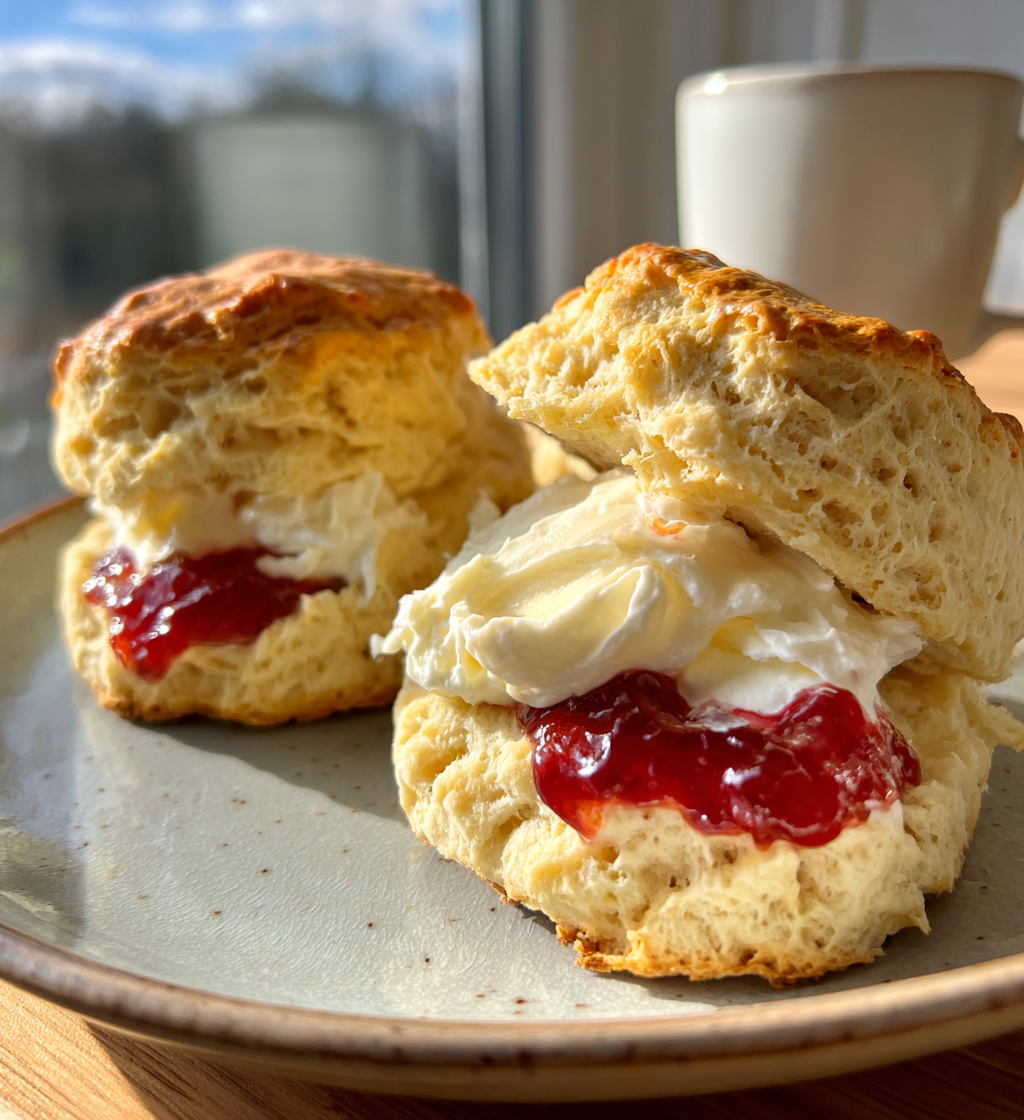
Few things feel as comforting and quintessentially British as a freshly baked scone served with clotted cream and jam. Whether enjoyed as part of a traditional afternoon tea or simply as a weekend treat, scones bring a sense of warmth and nostalgia to the table. Light, soft, and slightly crumbly, they’re the perfect balance between delicate texture and rich flavour. Best served warm, split open, and generously topped, they offer a simple pleasure that never goes out of style.
What makes traditional British scones so special is their simplicity. With just a handful of pantry staples and a few simple techniques, you can create a bake that feels both homely and elegant. Whether you’re hosting guests or treating yourself to a quiet tea break, these scones are guaranteed to elevate the moment.
Why You’ll Love This Recipe
- Light, fluffy texture with a classic crumb
- Perfect for afternoon tea or weekend baking
- Quick and easy to prepare
- Uses simple, everyday ingredients
- Customisable with fruit or different jams
- Authentic British baking experience at home

Best Tips for Perfect Results
Making perfect scones is all about technique and handling the dough with care. The key is to keep everything as light as possible to achieve that classic fluffy texture. Start by using cold butter and rubbing it into the flour until it resembles fine breadcrumbs. This step helps create the soft, tender crumb that scones are known for.
- Handle the dough gently to avoid tough scones
- Do not overwork the mixture—keep it light
- Use a sharp cutter and press straight down without twisting
- Keep the dough slightly thick for a better rise
- Place scones close together on the baking tray for even baking
Paying attention to these small details will give you beautifully risen scones with a soft interior and a lightly golden top.
Serving Ideas
Traditional British scones are best served warm with a generous layer of clotted cream and your favourite jam, such as strawberry or raspberry. They pair perfectly with a freshly brewed pot of tea, making them ideal for afternoon tea gatherings, celebrations, or a relaxing weekend treat.
You can also add fresh berries on the side for a slightly lighter touch or serve them as part of a larger tea spread with finger sandwiches and cakes. Whether enjoyed casually or as part of a more formal setting, scones always bring a touch of classic British charm.
Print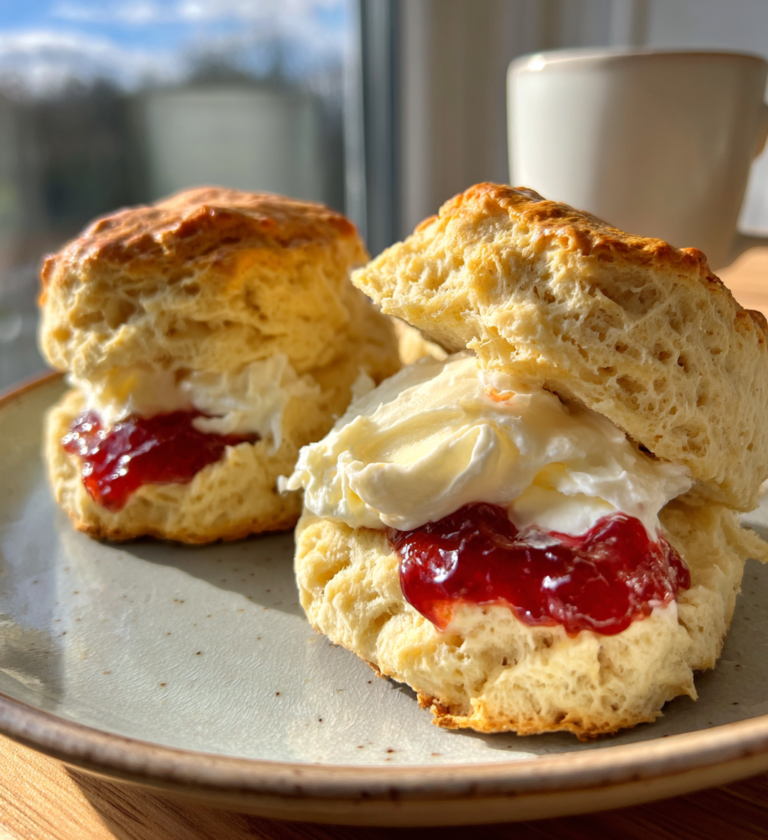
Traditional British Scones with Clotted Cream and Jam
Traditional British scones that are light, fluffy, and perfect for serving with clotted cream and jam. A classic afternoon tea favourite that’s simple to make and always delicious.
- Total Time: 22 minutes
- Yield: 8 scones 1x
Ingredients
- 225g self-raising flour
- 1 tsp baking powder
- 50g unsalted butter, cold
- 25g caster sugar
- 120ml milk
- 1 tsp vanilla extract
- Pinch of salt
- 1 egg (for glazing)
- Clotted cream, for serving
- Strawberry or raspberry jam, for serving
Instructions
- Preheat the oven to 200°C (180°C fan) and line a baking tray.
- Mix the flour, baking powder, and salt in a bowl.
- Rub in the butter until the mixture resembles breadcrumbs.
- Stir in the sugar.
- Add the milk and vanilla, then gently bring together into a soft dough.
- Turn onto a floured surface and lightly knead.
- Roll out to about 2cm thick and cut into rounds.
- Place on the tray, brush with beaten egg.
- Bake for 10–12 minutes until golden.
- Cool slightly and serve with clotted cream and jam.
Notes
- Do not overwork the dough to keep scones light.
- Use cold butter for the best texture.
- Serve warm for best flavour.
- Use a straight cut without twisting for better rise.
- Best eaten fresh on the day of baking.
- Prep Time: 10 minutes
- Cook Time: 12 minutes
- Category: Dessert
- Method: Baking
- Cuisine: British
- Diet: Vegetarian
Nutrition
- Serving Size: 1 scone
- Calories: 220
- Sugar: 6 g
- Sodium: 180 mg
- Fat: 9 g
- Saturated Fat: 5 g
- Unsaturated Fat: 3 g
- Trans Fat: 0 g
- Carbohydrates: 28 g
- Fiber: 1 g
- Protein: 4 g
- Cholesterol: 35 mg
Keywords: British scones, traditional scones, clotted cream scones, afternoon tea recipe, homemade scones UK
FAQs
Should I put cream or jam first?
This is a classic British debate. In some regions, jam is spread first followed by clotted cream, while others prefer the opposite. Ultimately, it comes down to personal preference.
Why are my scones not rising properly?
This can happen if the dough is overworked or if the ingredients are too warm. Keeping everything cool and handling the dough gently will help achieve a better rise.
Closing
Traditional British scones are a timeless bake that brings comfort and elegance together in every bite. Simple to make yet incredibly satisfying, they’re the perfect addition to any tea table. Once you’ve mastered them, you’ll find yourself coming back to this classic recipe again and again.